%202021_edited_edited.jpg)


Six Times I’ve Cried for Thee, Jamaica

Updated: Aug 2
By Dennis A. Minott, PhD
July 18, 2026
I have cried for Jamaica at least six times—not because I despised her, but because I loved her enough to recognise what she might have become.

These were not always public tears. Some came in the solitude of a bedroom thousands of miles from home. Others erupted first as anger, then settled into grief. One came at the funeral of a brilliant colleague whose life’s work embodied a Jamaican future that our country repeatedly approached, applauded—and then abandoned.
The latest tears were provoked by an article and a song sent by my perceptive daughter Melissa, who understood, perhaps more deeply than I had realised, why an old Caribbean federation still lives inside her father.
The First Time: The Morning After Federation

The first occasion was the morning after Jamaica voted on whether to remain in the West Indies Federation.
The referendum was held on 19 September 1961. Jamaicans were asked whether the country should remain within the Federation of the West Indies, the political union established in 1958 among ten Caribbean territories. A majority voted no. Jamaica withdrew, and the Federation was dissolved in 1962.
I was young, but not too young, as a student at Kingston College, to understand that something larger than an election had been lost.
The Federation was imperfect. It was financially fragile, constitutionally incomplete and burdened by legitimate disputes over representation, taxation, migration, leadership and the distribution of costs and benefits. Those defects deserved rigorous negotiation and institutional repair.
They did not necessarily require abandonment.
Instead, we chose the emotional satisfaction of standing alone over the difficult discipline of building together. Insular suspicion, partisan advantage and the seductions of a separate flag overcame the strategic logic of Caribbean scale.
All consequential political arrangements are troublesome. Federations quarrel over money, power, identity and geography. Difficulties are not proof that political union is mistaken. They are often proof that it matters.
That morning, I cried because I sensed that Jamaica had not merely rejected an administrative arrangement.
We had diminished the geographical size of our political imagination.
The Second Time: A Cold Night in Hangzhou

The second time came decades later, in a hotel room in Hangzhou, China.
Earlier that day, I had spent part of the morning with about ten rural technicians responsible for a small village hydroelectric plant. Their 70-kilowatt station operated continuously, using a Pelton water turbine connected by belt to an electrical alternator.
The technicians manually monitored and corrected the frequency of the alternating-current electricity being supplied. Their work was patient, repetitive and essential. In bitter cold and darkness, wearing the customary Mao-style caps, greasy overalls and flimsy flip-flops, they worked to keep their village powered.
We shared little spoken language. I relied upon sketches, equations, gestures, expressions and a considerable quantity of enthusiastic amateur sign language.
I explained that their task might be simplified by adapting an inexpensive Sharp programmable calculator, which cost, as I remember it, about five Hong Kong dollars. It could help them calculate more quickly the adjustments required to the turbine’s governing mechanism—the controls regulating the flow of water and therefore the speed of the generating equipment.
The idea was uncomplicated: measure the operating conditions, calculate the necessary correction, adjust the water flow and maintain electrical frequency with less guesswork and less continual human intervention.
They listened with extraordinary concentration.
There was no pretence that the proposal was beneath them because it was inexpensive. No committee demanded a glamorous imported system. No official insisted that intelligence could reside only inside costly equipment carrying a celebrated foreign brand.
Following further technical consultation with my Norwegian associate, they decided to implement the idea.
That night, alone in my hotel room, I wept.

Those rural Chinese technicians had recognised useful logic when it was placed before them. They were prepared to combine disciplined labour, local responsibility and a cheap programmable device to improve their village’s electricity supply.
And I thought of Jamaica.
How difficult would it be to persuade my own kin that an uncomplicated, inexpensive improvement could still be technically respectable? How many officials would reject it because it lacked grandeur? How many consultants would enlarge it into an unaffordable project? How many influential people would ask, not whether it worked, but who stood to earn from it?
The technicians possessed comparatively little formal status. Yet they displayed something that richer institutions frequently lack: intellectual humility.
They were willing to learn from a modest idea because the idea might work.
The Third Time: Legazpi and the Tyranny of Non-Essentials

The third occasion came during an assignment in Legazpi in the Philippines, shortly after Jamaica’s bitterly fought 1980 general election.
I confided in a Filipino colleague at PHILEC that two technically sensible rural-electrification practices would face fierce opposition in Jamaica.
One concerned practical protection against water hammer—the potentially damaging pressure surges that can occur inside the penstocks carrying water to high-head mini-hydroelectric turbines.
The other concerned the use of electricity poles that might not be cosmetically perfect or ruler-straight, but were structurally sound, safe and entirely capable of carrying their required loads.
In rural development, function matters. A penstock must convey water at the necessary pressure and flow without failing. An electricity pole must support conductors safely. Neither is required to win a beauty competition.
Yet I knew too well the reaction that our institutions could produce. Someone might object that the pipe arrangement looked insufficiently impressive. Someone else might ridicule the natural irregularity of a strong wooden pole. The conversation would drift away from engineering performance, safety and affordability and towards appearances, status, procurement ritual and imported notions of modernity.
My acting secretary, provided through the United Nations Industrial Development Organization, came to my room and witnessed my distress.
I was not grieving over crooked poles.
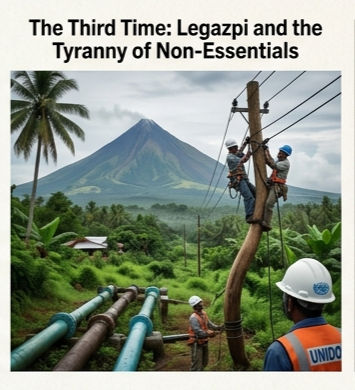
I was grieving over the national habit of allowing non-essentials to crowd out workable solutions.
On the other side of the world, I was watching and helping societies with fewer pretensions examine practical ways of extending electricity, productive capacity and human welfare. Meanwhile, Jamaica could spend years debating the appearance of an instrument rather than measuring the value of its outcome.
Jamaicans themselves possess abundant ingenuity. Our institutional failure is that we too seldom preserve, finance, test, replicate and scale what practical Jamaicans devise.
We too often confuse sophistication with expense, engineering with ornament and development with the ceremonial purchase of impressive equipment.
The Fourth Time: “What About Nuclear?”
The fourth cry began not as tears but as an explosion.

I heard the Speaker of the House of Representatives, Mrs Juliet Holness, ask during parliamentary proceedings, with evident confidence: “What about nuclear?”
My daughters heard me exclaim: “What the hell does that accountant know about energy generation?”
The language was impolite. It also placed too much emphasis upon her profession and not enough upon the true danger.
Accountants, lawyers, parliamentarians and citizens have every right to question engineers and participate in energy policy. Engineers possess no monopoly upon wisdom. Democratic government requires non-specialists to interrogate experts, examine alternatives and make decisions.
The danger arises when a casual question becomes a substitute for disciplined inquiry, or when political enthusiasm begins travelling far ahead of technical evidence.
Nuclear generation is not a fashionable accessory to be added to a national development catalogue. In Jamaica, it raises immense and inseparable questions concerning grid size, system reserves, financing, cooling, seismic conditions, emergency planning, regulation, radioactive waste, insurance, foreign dependence, security and long-term institutional competence.
“What about nuclear?” may open an inquiry.
It cannot constitute an energy policy.

Before anyone commits Jamaica to such a course, the country deserves independently tested answers. What size reactor could the Jamaican grid withstand losing suddenly?
What reserve capacity would be required? Who would finance construction, cost overruns, insurance, decommissioning and waste management? What cooling system would be used? What seismic and coastal hazards would the plant confront? Which institutions possess the personnel and authority to regulate it over generations?
I grieved because decisions of gargantuan consequence can be entertained in Jamaica upon foundations of knowledge too flimsy to support them.
Those who have not studied the system may nevertheless acquire the authority to commit generations of Jamaicans to its costs and risks.
The frustration is familiar to every trained person who has watched expertise treated as an inconvenience while confidence, connection and public office are mistaken for competence.
The Fifth Time: Cynthia Lewis and the Future Jamaica Mislaid

The fifth occasion came at the funeral of Dr Cynthia E. Lewis, which I attended by Zoom.
Cynthia was no ordinary colleague. She was an awesome biochemist, a Commonwealth Scholar and one of the indispensable critical thinkers of the ENERPLAN team.
Together, we pioneered and patented processes for fermenting the foliage of Leucaena leucocephala, not merely to produce one commodity, but to establish an integrated biological system capable of yielding fuel, fertiliser, feed and further productive value.
The gaseous products included methane, hydrogen and ethane, alongside carbon dioxide and hydrogen sulphide. The process also generated liquid and solid organic fertilisers and a highly promising ration for broiler chickens.
This was not a speculative idea surviving only inside a laboratory notebook.
The work was demonstrated at laboratory, pilot and practical operating scales. Its development and results were documented in a 42-minute film produced by Dermot Hussey.
The gas yields were independently analysed, including testing at the analytical laboratory of the then Shell Petroleum refinery in Jamaica and at an analytical laboratory in Tennessee.
The intellectual property was patented in Jamaica and across several Caribbean jurisdictions, including Antigua, Trinidad and Tobago, Grenada and Guyana.
The broiler-feed component was not based upon casual observation. Cynthia, whose doctorate from the University of Nottingham concentrated upon animal nutrition, formulated rations for the successive stages of the six-week broiler-growth cycle.

Newport Mills, on Marcus Garvey Drive, mixed the feeds according to her formulations. We then conducted controlled pilot feeding trials involving approximately 8,000 birds at a time.
I had followed Cynthia’s scholarship closely. While she was studying in Britain, I read her doctoral work at Quorn, near the University of Nottingham, visited aspects of her experimental programme and later read the successful final thesis she brought home when she returned from study leave to ENERPLAN. During her absence, Dr Denise Forrest had ably stood in for her.
The project was therefore neither an undeveloped hunch nor a laboratory curiosity.
It represented an integrated attempt to show how Jamaica could convert a vigorous tropical plant into gaseous fuels, agricultural inputs, animal nutrition, rural employment, import substitution and scientific capacity.
The work attracted serious regional and international attention during the 1980s. Jamaica took notice. So did CARICOM, the Philippines, the Caribbean Development Bank, the Caribbean Agricultural Research and Development Institute and the Organization of American States. Caribbean Broilers and East Caribbean Flour Mills recognised its promise.
The Jamaican press paid close attention to the First Caribbean Leucaena Investment Conference, held in Kingston. Participants came from Manila, India, Washington, DC, Florida, Haiti, Cuba, Barbados, Antigua, Belize, Mexico, Guyana, Nigeria, Australia, Mauritius, Suriname, Texas and, of course, Jamaica, the host country.
The conference was no ceremonial gathering arranged merely to praise an attractive idea. It brought researchers, investors, development specialists, agricultural practitioners and other interested participants together around the scientific, commercial and regional possibilities of Leucaena.
Cynthia edited the substantial collection of papers and conference proceedings. That documentary record remains further evidence that the ENERPLAN programme was not a private fantasy recalled more generously with the passage of time. It had been placed before informed Caribbean and international audiences, subjected to technical discussion and treated seriously as a foundation for investment and productive development.
For a moment, it appeared that Jamaican science might be trusted to build something genuinely Jamaican—something rooted in our soils, climate, agricultural needs and intellectual resources.
Why, then, was the system not commercialised?
The decisive obstacle was financing.
ENERPLAN used nearly all its consulting earnings to pay salaries and sustain the research. We did not request any public-sector grant for the work. We relied upon what we could earn and reinvest ourselves. https://drive.google.com/file/d/1-kYNh4NaVQfV1zife-ZufzwtC0en5CrK/view?usp=sharing
At the crucial stage, we possessed no conventional collateral acceptable to Jamaican banks. Although we owned patents, those patents had virtually no bankable value in Jamaica.
In jurisdictions such as the United States, Canada, Mexico and parts of Europe, properly evaluated intellectual property could sometimes contribute to financing arrangements. Jamaica’s financial system was more accustomed to recognising intellectual property connected with music, painting and other established creative industries than patents covering scientific and industrial processes whose future earnings were not yet familiar to local lenders.
That deficiency has been modestly repaired during the past decade. Some enlightened Jamaican financiers may now be more willing to consider intellectual property among the assets supporting an enterprise.
But ENERPLAN encountered the earlier system.
The science had advanced. The financing architecture had not.
This distinction matters. The project did not disappear because controlled trials disproved it. It did not collapse because the patents were contested, the feedstock was unavailable, the process was technically incoherent or the team could not manage the research.
It stalled because the people who had created valuable, patented knowledge could not persuade the banking system that Jamaican knowledge itself might become a bankable asset.
Jamaica has a tragic habit of applauding achievement without constructing the institutions required to carry it forward.
We celebrate the announcement. We admire the prototype. We congratulate the inventors. Then priorities change, administrations turn, files are misplaced, institutional memories fade and those who did the difficult thinking are left to watch the country import inferior fragments of what they had already developed as an integrated whole.
Cynthia never lost her capacity for hope.
In 2022, two unnamed Jamaican business houses began showing preliminary interest in the possible revival of the Leucaena 4F work. That interest followed representations by architect Desmond Hale, who had known of our work since his student days at the University of Technology. He raised the project with financiers associated with one of his developments.
These were encouraging approaches, not completed financing agreements. The interested houses had not authorised their names to be placed before the public, and no final investment had been secured.
Nevertheless, for the first time in many years, revival appeared possible.
Only days before her death, Cynthia lit up at the prospect that the project might at last attract the financial backing required to move towards renewed Jamaican development in 2023.
Then, on 31 December 2022, Cynthia departed this life—one day before the year in which we hoped that interest might mature into action.
At her funeral, I did not wail. My sorrow was quieter and perhaps more severe.
I grieved for Cynthia: for her brilliance, companionship, scientific courage and faithfulness to the work.
But I also grieved for the fickleness of modern Jamaica.
What kind of country allows serious thinkers to spend decades proving what can be done, only to require them to grow old waiting for financial and official attention to mature into action?

What kind of nation applauds a breakthrough, forgets it, and later announces the need for imported solutions to problems its own people had already addressed?
Cynthia’s death was a personal bereavement. Yet it also felt like the burial of one more possible Jamaica: scientifically confident, agriculturally intelligent, energetically resourceful and unafraid to trust its own minds.
On that day, I cried for a colleague.
I also cried for the country that had not fully understood what it possessed while she was still here to help us build it.
The Sixth Time: Melissa Understood
The sixth occasion came only recently.

I completed an article titled “Of Course, I Still Believe in Federation” and saw it published in Our Today. Writing it required me to revisit the first of these tears—the grief of September 1961—and to ask whether the Caribbean’s present fragmentation had vindicated our ancestors’ retreat from political union.
Then Melissa, my sensitive and wise daughter, sent me Julian Rogers’s Caribbean Bridges article, “If Only We Did Federate…”, together with its accompanying song.
The piece revisited the collapse of the West Indies Federation and the immense Caribbean possibilities buried with it.
Melissa’s message told me more than the article alone could say.
My daughter understood.
She understood that Federation was not merely an old constitutional arrangement about which her father remained nostalgically obsessed. It represented a road not taken: a Caribbean with greater economic weight, deeper pools of expertise, more credible regional institutions and a wider sense of belonging.
Perhaps I cried because hope had travelled between generations.
My first tears were shed over a Caribbean broken apart. My sixth came because my daughter recognised that the pieces might still remember the shape they were meant to form.
Why These Tears Matter
Each occasion concerned something apparently different: Federation, Chinese mini-hydro, Philippine rural electrification, Jamaican nuclear imaginings, the funeral of a pioneering biochemist and a daughter’s message.
Yet they were really the same occasion.
Each concerned Jamaica’s troubled relationship with practical knowledge, institutional memory and collective possibility.
We resisted regional union because separate sovereignty flattered us. Our institutions resist simple technologies because expense impresses them. We sometimes reject sturdy solutions because appearances distract us. We entertain gigantic technological commitments because authority too often outruns understanding. We praise our scientists, then starve their work of continuity until either the project or the pioneer passes away.
This is how a country loses not merely inventions, but futures.
The ENERPLAN story belongs beside the village hydro plant in China and the rural-electrification lessons of the Philippines because all three ask the same question: can ordinary materials, disciplined minds and locally appropriate technologies be trusted to improve human life?
Elsewhere, people frequently answer by trying.
In Jamaica, our institutions too often answer by convening, postponing, politicising, forgetting and eventually importing.
But tears are not necessarily surrender.
I have cried because I have seen what disciplined people can accomplish with modest resources. I have seen technicians learn across languages. I have seen villages treat electricity as a shared responsibility. I have worked beside Jamaican scientists capable of converting biological abundance into fuel, fertiliser, feed and national possibility.
I have seen societies accept that a solution need not be glamorous to be transformative.
And I still believe Jamaica can learn.
I believe our people can distinguish treasure from glitter, engineering from salesmanship and leadership from performance.
I believe we can recover the work of Cynthia Lewis and the ENERPLAN team, not as a museum exhibit or an exercise in nostalgia, but as a documented foundation upon which new researchers, farmers, engineers, financiers and entrepreneurs can build.
I believe, too, that the Caribbean can move beyond the psychology of small territories defending small administrative kingdoms while the world organises power at continental scale.
Most of all, I believe that when a daughter sends her father a song about Federation, history has not finished speaking.
Six times I have cried for thee, Jamaica.
The seventh time, God willing, may be for joy.
Lagniappe, Brawta, Pilón and Panquai
Lagniappe is not merely an exotic Louisiana word preserved in dictionaries. It lives in ordinary Caribbean speech. People in Trinidad and Tobago, Grenada, Saint Lucia, Dominica, Martinique and Guadeloupe use it naturally, as do Haitians in their own everyday linguistic settings.
Across our region, related words carry the same hospitable idea. In Jamaica, we say brawta: the little extra freely added after the proper measure has already been given. In parts of the Spanish-speaking Caribbean, pilón can convey the bonus, the extra handful or the small gift beyond the bargain. Panquai belongs to the same family of Caribbean generosity in French- and Creole-speaking communities.
Lagniappe, brawta, pilón and panquai all express a civilisation’s instinct to give something more.
This essay’s brawta is Julian Rogers’s Caribbean Bridges article, “If Only We Did Federate…”, together with its accompanying song: a further offering to those who believe that the Caribbean’s broken pieces may yet remember the larger shape they were meant to form.


Comments