%202021_edited_edited.jpg)


ALL NEIGHBOURS GREEN: Starting With an All-Green Jamaica by 2031

By Dennis A. Minott, PhD
September 28, 2026
For more than half a century, I have worked in and around renewable energy—hydroelectricity, biomass and solar—asking essentially the same Jamaican question: why should an island lavishly endowed with sunshine, wind, water, vegetation and human ingenuity remain chronically dependent on imported fuel?
In Thunderclap 7, “Political Will Needed: The Arithmetic of Jamaica’s Energy Autonomy by 2031”, I argued that the answer is no longer principally technological. Jamaica can build an overwhelmingly indigenous, renewable electricity system by 2031 if we decide to organise our capital, regulation and infrastructure around that objective.
But Jamaica should not be the end of the argument.
It should be the beginning.
My larger proposition is simple:
ALL NEIGHBOURS GREEN.
Imagine a Caribbean in which Belize, The Bahamas, the Turks and Caicos Islands, Cuba, Cayman, Jamaica, Haiti, the Dominican Republic, Puerto Rico, the Virgin Islands and the Lesser Antilles southward to Trinidad and Tobago, Guyana and Suriname progressively build renewable-rich national grids—and then, wherever engineering, bathymetry and economics justify it, connect them by subsea electricity cables.
Not one gigantic, fragile extension cord.
Not a system in which Kingston goes dark because something fails in Basseterre.
Each participating country would retain a grid capable of operating islanded: able to separate, stabilise itself and supply essential domestic loads independently. But when conditions permit, those grids could also operate cooperatively, exchanging surplus power, reserve capacity and balancing services across borders.
That distinction is crucial.
Interconnection should add resilience, not subtract sovereignty.
Jamaica First
The demonstration project should be Jamaica.
Thunderclap 7 set out indicative capital expenditure of approximately US$2.15 billion over five years: about 850 MWp of utility-scale and distributed solar; 180 MW of wind; 75 MW of dispatchable biomass-derived energy; 35 MW of additional hydro; 1,400 MWh of battery storage; 100 MW/800 MWh of pumped hydro; a hardened and automated national grid; and infrastructure for rapid transport electrification.
Those numbers are not sacred tablets.
Costs will change. Resource assessments will refine capacities. Storage technologies will improve. Environmental studies may eliminate some locations and favour others. For instance, our dispatchable biomass capacity must strictly leverage dedicated non-arable short-rotation coppice forestry—such as Leucaena leucocephala cultivated on degraded or marginal terrain—and agricultural residues, explicitly protecting food-producing arable land and native watershed forests from land-use competition.
The important thing is the architecture: diversified indigenous generation, substantial storage capability, strong transmission, distributed rooftop generation, automated protection, flexible demand and electrified transport.
Jamaica should cease treating renewables as ornaments attached to a fossil-fuel system.
The renewable system must become the system.
That also means building for hurricanes.
Generation should be geographically dispersed. Critical feeders must be hardened. Substations should be designed for flood resilience. Microgrids should protect hospitals, water systems, emergency shelters, telecommunications and strategic food facilities. Schools, churches, hotels, factories and households should increasingly become generators as well as consumers.
By 2031, therefore, “All-Green Jamaica” should mean much more than producing an attractive renewable-energy percentage for an annual report.
It should mean that normal electricity demand can be met overwhelmingly from indigenous renewable resources and storage; that imported fossil-fuel generation has become emergency, reserve or transitional rather than structurally indispensable; and that an expanding share of surface transportation runs on Jamaican-made electricity.
Then something extraordinary becomes possible.
From Island Grids to an Archipelago Grid
The Caribbean has traditionally treated the sea as the reason our electricity systems must remain isolated.
In the twenty-first century, the sea can become the pathway connecting them.
This is no fantasy of mine. On 15 June 2026, the Caribbean Development Bank launched its Caribbean Regional Electricity Grid Interconnection and Renewable Energy Scaling Initiative—CREGI-RES. Its purpose is to identify practical opportunities for scaling renewable generation and exchanging electricity among Caribbean jurisdictions, including through submarine interconnections where renewable resources, demand, engineering, lifecycle economics, environmental considerations and regulatory arrangements justify them.
The concept has therefore already moved from regional imagination towards formal institutional study.
We also possess Caribbean precedents.
Belize Electricity Limited confirms that Belize’s national grid has been interconnected with Mexico’s national electricity grid since 1998. The Caribbean Development Bank is also financing a submarine-cable project intended to connect Caye Caulker to Ambergris Caye and thereby to Belize’s national electricity system.
But there is an even older Caribbean example that has particular personal meaning for me.
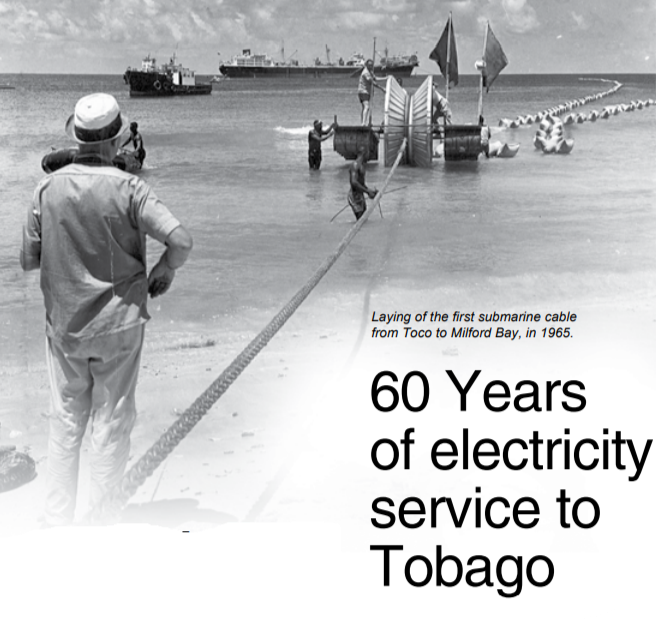
The Trinidad and Tobago Electricity Commission—T&TEC—laid its first submarine power cable between Trinidad and Tobago in 1965 and officially commissioned it in 1966. T&TEC’s historical account describes that cable as 23 miles long; intriguingly, the official commemorative brochure prepared for the inauguration describes it as a 27-mile submarine cable. What is beyond dispute is the date of the ceremony: 25 March 1966.
I know that event not merely from a document.
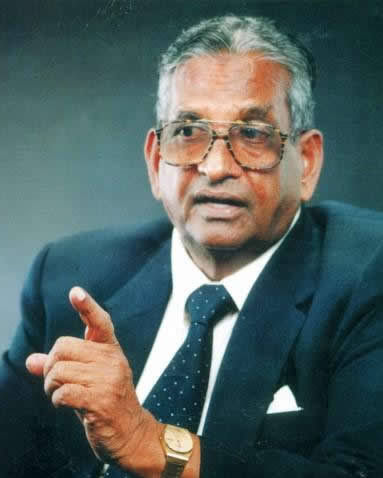
The cable was commissioned one year after I went to study engineering at St Augustine. Four months after 25 March 1966, I was leading a YMCA boys’ camp in Tobago, still deeply impressed by what the Honourable Kamaluddin Mohammed, then Minister of Public Utilities, had said, in Tobago, at the inauguration of the inter-island electrical link.
Prof. Kenneth Julien featured in UWI St. Augustine publication. Source: Issuu / UWI STAN & Perspecti Professor Kenneth Julien. Source: New York Daily News Archive
For a young engineering student, under the direct tutelage of distinguished Engineering Dean Professor Ken Julien, the lesson was unforgettable. My very inspiring friend and confidante, the late EK Powell---a Jamaican---then served T&TEC as its Chief Engineer.
Two islands separated by the Galleons Passage did not have to remain electrically separate merely because salt water lay between them.
More than sixty years later, that inter-island connection remains a powerful Caribbean precedent for the larger principle I am advancing.
Globally, the technology has travelled dramatically farther.
The North Sea Link joins Great Britain and Norway across approximately 720 kilometres, with transmission capacity of 1,400 MW. Viking Link, connecting Great Britain and Denmark, extends approximately 765 kilometres and likewise has a capacity of 1.4 GW.
So let us stop treating seas as electrical Berlin Walls patrolled by Marco & Pete.
An Energy Necklace Around the Caribbean
A sensible Caribbean network would be constructed in stages, not drawn overnight with a ruler across a map.

Engineers must respect bathymetric reality. Crossing shallow island shelves is fundamentally different from traversing deep oceanic abysses like the Cayman Trench or the Puerto Rico Trench, where depths exceeding 3,000 to 7,000 metres present extreme pressure, seismic activity, and complex submarine terrain.
Consequently, routing must prioritize shorter, shallow-water shelf crossings—such as within the Lucayan Archipelago, across the Virgin Islands platform, or along the Eastern Caribbean island arc—where high-voltage direct current (HVDC) light cables and dynamic armor protection can be deployed at manageable capital cost. Longer or deep-trench routes must undergo rigorous seabed bathymetry, dynamic thermal rating, and fault-isolation modeling before a single dollar of capital is committed.
Where deeper crossings are justified by massive structural resource complementaries, modern high-voltage direct current (HVDC) technology—with Modular Multilevel Converters (MMC) and specialized deep-sea dynamic armor—provides the necessary long-distance control, low line-loss, and asynchronous grid decoupling.
Every proposed crossing would require proper bathymetric and seabed surveys, landing-point studies, hurricane and seismic-risk analysis, environmental assessment, converter and protection studies, redundancy planning and merciless economic scrutiny.
The result might eventually resemble an energy necklace around the Caribbean Basin.
In the north and west, Belize already possesses a continental electrical connection through Mexico. The Bahamas and Turks and Caicos could develop highly distributed solar-plus-storage systems suited to their geography. Cuba possesses sufficient scale to develop a substantial renewable system in its own right. Jamaica could become an important balancing and interconnection node.
Hispaniola—Haiti and the Dominican Republic—presents the possibility of strengthening terrestrial interconnection across one shared island before outward submarine links are considered.
Farther east and south, the geothermal resources of volcanic islands could eventually provide firm renewable electricity to neighbouring systems. Solar-rich territories could export midday surpluses. Wind-rich territories could contribute when meteorological conditions favour them. Hydroelectric resources in mainland Guyana and Suriname could, subject to formidable economic, environmental and transmission tests, form part of the longer-term regional conversation.
The beauty is not that every country would produce the same electricity in the same way.
It is precisely that they would not.
When Jamaican solar output is abundant, another territory may need it. When our evening peak demand arrives, another system may possess spare geothermal, hydro, wind, Leucaena-derived biomass energy or stored electricity.
A larger balancing area can reduce the amount of expensive standby capacity that every small jurisdiction would otherwise have to duplicate for itself.
And consider the fundamental economics.
The sun does not invoice us for LNG.
The wind imposes no foreign-exchange surcharge.
A river does not suddenly raise its price because a war erupts thousands of kilometres away.
And a battery does not dispatch a tanker to collect US dollars or Chinese yuan before releasing electrons.
Resilience Through Cooperation & Financial Architecture
Interconnection must nevertheless never become dependence disguised as integration.
Every participating country should maintain sufficient indigenous generation, storage, black-start capability, protection and network sectionalisation to survive the loss of its external interconnectors.
Subsea cables should permit help.
They should never become prerequisites for keeping a country alive.
That requirement matters critically in hurricane country.
A properly engineered archipelago network would be sectionalised and protected. If a cable failed, protection systems would isolate the fault rapidly. If one national network suffered a major disturbance, synchronisation, converter controls and system-protection arrangements should prevent that disturbance from automatically dragging its neighbours down with it.
Conversely, after a hurricane devastates one territory, surviving neighbours could potentially transmit emergency electricity once its receiving network and interconnection facilities were safe to energise.
That is energy solidarity translated from speeches into conductors, power electronics, substations and fibre-optic control.
Crucially, overcoming the political economy of cross-border grid integration requires an equally robust financial and governance architecture. We cannot expect private capital or sovereign utilities to absorb severe offtaker risk, sovereign debt disparities, currency fluctuations, or political volatility across disparate jurisdictions.
We must construct a regional financial mechanism:
A Caribbean Interconnection Guarantee Facility (CIGF): Anchored by the Caribbean Development Bank (CDB), Inter-American Development Bank (IDB), and international climate funds, this facility would provide credit enhancements, political risk insurance, and sovereign payment guarantees for cross-border Power Purchase Agreements (PPAs).
An Independent Regional Grid Code & Tariff Authority: An arm's-length regional regulatory body—established under CARICOM/CSEC frameworks—to govern wheeling tariffs, non-discriminatory cross-border dispatch, and fault-liability protocols, ensuring that geopolitical friction or unilateral sanctions do not interrupt the flow of electrons.
Specialized SPVs for Cable Infrastructure: Subsea interconnectors should be owned and operated by independent regional Special Purpose Vehicles (SPVs) under regulated asset base (RAB) models, insulating national generation assets from subsea infrastructure risk.
This creates an economic opportunity far larger than electricity alone.
CARICOM and its neighbours need not remain dozens of small markets purchasing batteries, transformers, inverters, cables and control systems separately and at disadvantageous scale.
Imagine coordinated regional procurement.
Imagine sufficiently harmonised technical standards that equipment, expertise and emergency crews can move quickly between jurisdictions.
Imagine Caribbean manufacturing and assembly.
Imagine thousands of young Caribbean electricians, engineers, line workers, protection specialists, battery technicians, software specialists, power-system analysts and marine-cable technicians trained for an industry that does not yet exist at regional scale.
Our universities, community colleges and technical institutes should be preparing those people now.
Political Will Is Still the Scarce Fuel
None of this eliminates difficult questions.
Who owns the interconnectors?
How are transmission tariffs determined?
Who dispatches cross-border electricity?
What happens during scarcity?
How are incompatible regulations, currencies, sanctions and political disputes prevented from interrupting electrons?
How do we protect seabeds, fisheries, reefs and coastal communities?
Who pays for redundancy?
Which projects are genuinely economical—and which merely look magnificent on conference slides?
These are reasons for rigorous engineering, economics, multilateral financial engineering, and diplomacy.
They are not reasons for paralysis.
Uruguay provides an instructive national example. Its Ministry of Industry, Energy and Mining reports that 98 per cent of its electricity generation in 2025 came from renewable sources—46 per cent hydroelectricity, 34 per cent wind, 14 per cent biomass and 4 per cent solar.
Europe routinely exchanges electricity across national borders. Belize has done so with Mexico since 1998. Trinidad and Tobago demonstrated inter-island submarine electrical connection in 1966. And in 2026 the Caribbean Development Bank began formally studying regional grid interconnection and submarine-cable opportunities.
The conceptual door is therefore no longer closed.
Jamaica should walk through it boldly—but scientifically.
Let us make 2031 a national proving date: an electricity system organised around sunshine, wind, water, biomass, storage, intelligence and resilience.
Let our island demonstrate that a small developing state need not choose permanently between energy poverty and imported-fuel dependence.
And then let us look beyond our horizon.
Belize towards The Bahamas.
The Bahamas and Turks and Caicos towards the Greater Antilles.
Cuba, Jamaica and Hispaniola as major northern Caribbean systems.
The Greater Antilles towards the Eastern Caribbean.
Island by island.
Link by economically and technically justified link.
Southward towards Trinidad and Tobago, Guyana and Suriname.
Maybe even Cayenne--a part of France.
Each nation sovereign.
Each grid resilient.
Each capable of standing alone when necessary.
All increasingly capable of standing together.


Comments